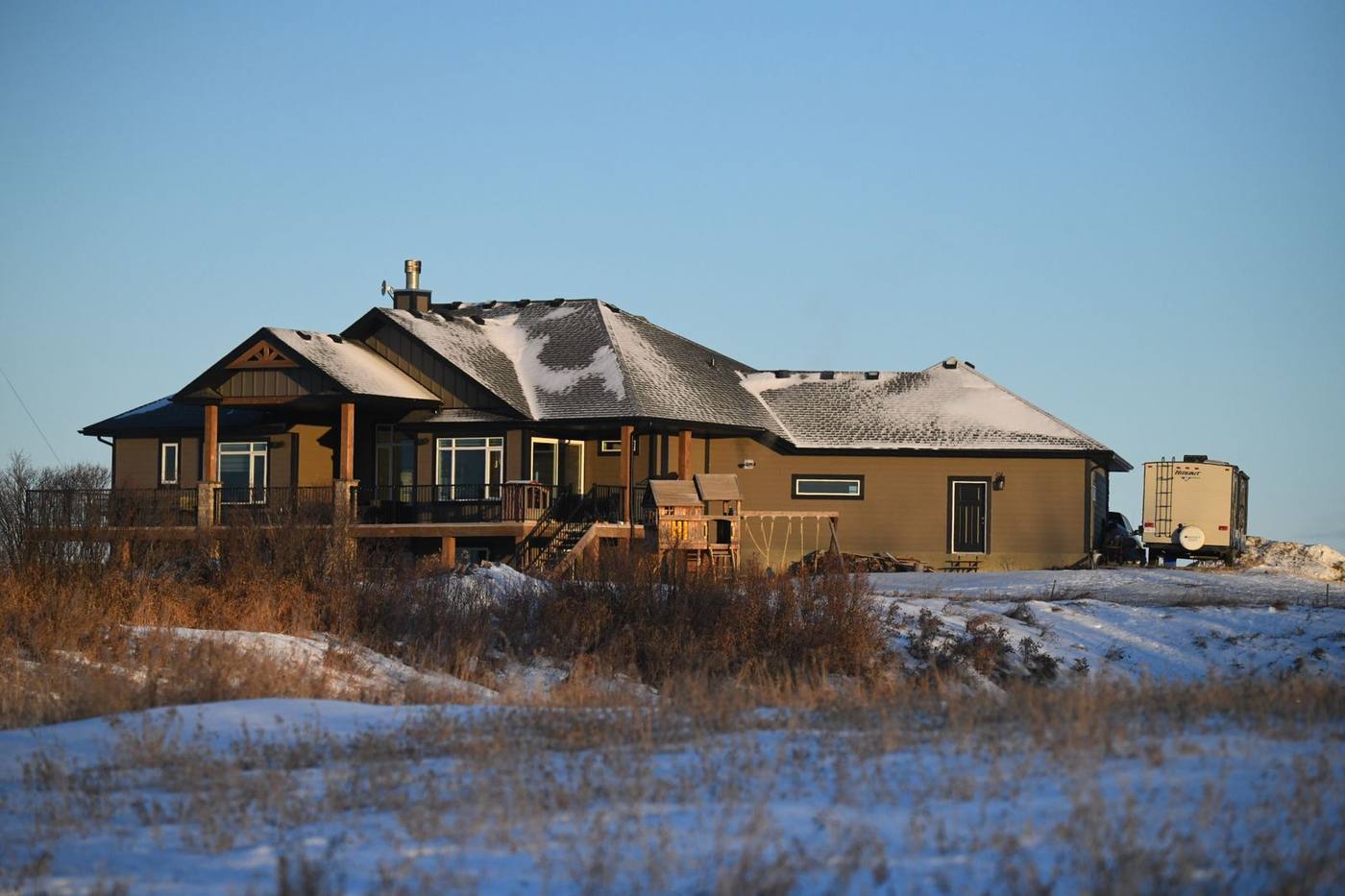
Many buyers looking near Okotoks want a few acres, a shop and room to breathe, while staying close to town services and Calgary. Most acreages around Okotoks are in Foothills County, not the Town, and that changes the rules for what you can build, how you get water, and how wastewater is handled.
Our general guide, Buying your first acreage near Calgary, covers the big picture. This post is the Foothills County version: specific documents, bylaws and offices to check before you firm up an offer.
1. Confirm which municipality you're buying in
Start by finding out whether the property is in the Town of Okotoks or in Foothills County. The Town of Okotoks is surrounded by Foothills County. The Town's last major annexation took effect on July 1, 2017, adding 1,950 hectares (4,900 acres) from the County (Town of Okotoks).
Why it matters:
- Different bylaws and permits. The Town and the County each have their own land-use bylaw, development permit process and services.
- Land near the boundary. Okotoks and Foothills County share an Intermunicipal Development Plan (IDP) that guides future land uses, roads and services along their shared edges. If an acreage sits in or near an identified Okotoks growth area, ask both municipalities what is planned nearby.
2. Look up the land-use district
In Foothills County, land use is governed by Land Use Bylaw 60/2014 (office consolidation updated June 10, 2026). Find the parcel's district on the County's land use map, then read the rules for that district. Don't rely on the listing description.
Many acreages are in the Country Residential (CR) district. Under the current bylaw, CR rules include:
- Subdivision density: a maximum of one lot per 2.02 ha (5 acres) of land under the same title, up to 32 lots per quarter section. A minimum new parcel size of 0.81 ha (2.0 acres) and a maximum of 8.49 ha (20.99 acres) apply, unless the title predates the bylaw.
- Lot coverage: buildings, including accessory buildings and impervious surfaces, can cover no more than 40% of the lot.
- Dwellings: for parcels under 80 acres, one single-family dwelling plus either one secondary suite or one temporary dwelling, under the bylaw's rules.
- Side and rear setbacks: 15 m (49.21 ft) from the property line. Front setbacks depend on the type of road.
- Suites: a secondary suite inside the house is a permitted use. A detached suite, such as a garden or garage suite, is discretionary, so approval isn't automatic.
Other common districts, including Agricultural, Country Estate Residential and Cluster Residential, have different rules. If you plan to keep horses, run a home-based business, add a shop or subdivide later, check the specific use against the district's permitted and discretionary lists.
3. Ask about permits for what's already there
Under the County bylaw, most development needs an approved development permit. A development permit is not a building permit, and construction can't start until both are in place where required.
Before you firm up, ask the seller and the County:
- Were permits issued for the shop, garage, suite, deck or additions?
- Were the permits closed with final inspections?
- Are any applications or compliance issues outstanding?
A current Real Property Report and a compliance check help confirm that buildings sit where they should relative to the setbacks.
4. Check overlays: flood and airport
The Foothills County bylaw includes overlay districts that add rules on top of the base district, including a 2013 Flood Hazard Protection Overlay and an Airport Protection Overlay. The County sits along the Sheep and Highwood river valleys, so ask whether the parcel falls within an overlay and what that means for building or renovating. Alberta's flood hazard mapping is another reference point.
5. Water: well records and testing
Most acreages rely on a private well, and the owner is responsible for water safety. Before you firm up:
- Find the well record. Search the Alberta Water Well Information Database by legal land description or well tag number for the drilling report, depth and any yield test.
- Test the water through an accredited lab. Alberta Health Services' public health program won't test samples taken for real estate, so you'll need to use, and pay for, a commercial lab.
- Plan for ongoing testing. For drinking-water wells, Alberta Health Services recommends a bacteria test twice a year and a chemical and trace-metals test every three years.
- Ask about the water system, including the pump's age, any treatment equipment, cisterns and past problems.
6. Septic: records and a professional inspection
Private sewage systems in Alberta are governed by the Alberta Private Sewage Systems Standard of Practice 2021. Installing, altering or adding to a system requires a permit.
Ask the seller for:
- The system type, installation date and any permit records
- Pump-out and service history
- The location of the tank and field, so they aren't built over or driven on
Then arrange an inspection by a qualified professional. If you plan to add bedrooms or a suite, ask whether the existing system would need changes.
7. Access, title and services
- Legal access: confirm the driveway connects legally to a road, and check for shared-access agreements.
- Title: review registered caveats, easements and utility rights-of-way with your lawyer.
- Services: confirm internet and mobile coverage, power, heating fuel, garbage arrangements and road maintenance at the specific address.
8. Build the checks into your offer
Discuss with your REALTOR® and lawyer which conditions to include, such as inspection, water quality and quantity, septic, financing, and document review, and allow enough time for County enquiries. Browse current acreage listings, compare areas such as De Winton, Priddis and Millarville, or read our Foothills County overview and buyer's checklist.
Selling a home before you buy your acreage?
Many acreage buyers need to sell a home in Calgary or Okotoks first. Knowing what your current property could sell for helps you plan your budget and timing. Walter Saccomani and Harry Z. Levy, REALTORS® with Real Broker, can prepare a free, no-obligation valuation based on recent comparable sales.
Request your free home valuation → or call (403) 681-5389.
A free home valuation is a market opinion, not an appraisal.
Frequently asked questions
Are acreages near Okotoks in the Town or in Foothills County?
Most acreages around Okotoks are in Foothills County, which surrounds the Town. Always confirm the municipality for the specific parcel, because the bylaws, permits and services differ.
What is the minimum acreage size in Foothills County?
In the Country Residential (CR) district under Land Use Bylaw 60/2014, new parcels must generally be at least 0.81 ha (2.0 acres) and no more than 8.49 ha (20.99 acres). Other districts have different rules, so check the parcel's district.
Can I add a secondary suite to a Foothills County acreage?
In the CR district, a secondary suite inside the house is a permitted use. A detached suite is discretionary and needs County approval. Permits and private sewage requirements still apply.
Will Alberta Health Services test well water for a home purchase?
No. AHS public health won't test samples taken for real estate purposes. Use an accredited commercial lab and build the results into your conditions.
About the authors: Walter Saccomani and Harry Z. Levy are REALTORS® with Real Broker, serving Calgary and area acreage buyers and sellers. Calgary Fine Homes is their team name, not a brokerage. Call (403) 681-5389.
This article is general information only, not legal, engineering or health advice. Bylaws and standards change, so confirm property-specific details with Foothills County, the Town of Okotoks and qualified professionals. The trademarks REALTOR®, REALTORS® and the REALTOR® logo are controlled by The Canadian Real Estate Association (CREA) and identify real estate professionals who are members of CREA. MLS® is a trademark owned by CREA.
Sources
Foothills County, Land Use Bylaw 60/2014, office consolidation updated June 10, 2026: https://www.foothillscountyab.ca/government/bylaws/land-use-bylaw-602014 (PDF: https://www.foothillscountyab.ca/media/6327). Covers s.1.6.1–1.6.2 (development vs. building permit), Part 5 overlays (11.1 2013 Flood Hazard Protection; 11.2 Airport Protection), and s.13.1 Country Residential (permitted and discretionary uses, 13.1.6.2 density and parcel size, 13.1.7.1 40% coverage, 13.1.7.2 dwelling density, 13.1.7.3 setbacks).
Town of Okotoks, "How Our Town Grows" (2017 annexation of 1,950 ha / 4,900 ac, effective July 1, 2017; IDP description): https://www.okotoks.ca/your-government/plans-and-projects/how-our-town-grows
Town of Okotoks and M.D. of Foothills, Intermunicipal Development Plan (Bylaw 12-16 / 38/2016), which states the Town is surrounded by the County: https://www.okotoks.ca/sites/default/files/2020-12/Bylaw%2012-16%20June%202016_0.pdf
Alberta Health Services / MyHealth Alberta, "Testing your drinking water in Alberta" (current as of Dec 16, 2024): https://myhealth.alberta.ca/Alberta/Pages/Testing-Your-Drinking-Water-in-Alberta.aspx
Government of Alberta, Alberta Water Well Information Database: https://www.alberta.ca/alberta-water-well-information-database
Government of Alberta, Private sewage codes and standards (Alberta Private Sewage Systems Standard of Practice 2021): https://www.alberta.ca/private-sewage-codes-and-standards
General information only. Confirm property-specific details with qualified professionals and the relevant municipality.